By Lisa English & Cody Rice-Velasquez
The lights in the Busybody were never just lights. They were pink gels and amber filters, designed to soften the edges of reality until every scar vanished under a layer of neon and sweat.
On a Tuesday night in 1994, I stood backstage while the thump of Michael Jackson’s Thriller vibrated through the floorboards. The bass didn’t just rattle the walls; it rattled my teeth. I leaned into the vanity mirror to check my makeup. For the first time in a decade, I didn’t see the performer.
I saw the ghost.
I was twenty-nine and thin—too thin. Methamphetamine had carved hollows into my cheeks that no amount of contour could hide. My eyes were glassy, distant, staring back at a woman I hadn’t seen since outrunning a “Monster” ten years prior. I looked down at my hands. They were shaking. Not from the adrenaline of the stage, but from the chemically induced tremors of a life that had finally outpaced my ability to control it.
The girl who dreamed of dancing for Elvis was gone. In her place was a “Madam”—a woman with three pagers clipped to her belt, a luxury car in the lot, and a list of clients who paid for the privilege of a few hours in my shadow. But in the harsh backlight of the dressing room, the shadow was all that was left.
I leaned closer to the glass and whispered, “Lisa.”
The glass didn’t answer.
I knew then that the music was going to stop. Not because the song ended, but because I was finally asking for a payment I couldn’t afford.
I chose the exit before the lights went out for good.
Poverty isn’t poetic. In Somerville, Indiana, it didn’t smell like woodsmoke or nostalgia; it smelled like the metallic tang of fear and the ozone of the RCA factory where my father, Claude, worked.
He was a “funny drunk” until he wasn’t. I watched from the doorway, small and silent, as he flung a plate of corn and mashed potatoes against the kitchen walls because he decided the pepper my mother had used looked like “dirt.” The sound of the china shattering was less terrifying than the silence that followed. I can still see the food sliding down the cheap wallpaper, a yellow and white smear of a man’s fragility. In that house, you couldn’t predict the explosion. You just learned to be quiet enough to survive the night without being noticed.
Children raised in environments of unpredictable volatility—where a parent’s mood can shift from “funny” to violent without warning—often develop high-level preservation strategies. One of the most common is the role of the “Invisible Child.”
By suppressing their own needs, voice, and physical presence, the child attempts to neutralize their existence to avoid becoming a target. This adaptation is effective for surviving a dangerous home, but it often lays the groundwork for future victimization. The child learns that safety equates to silence and that their primary function is to manage the emotional climate for the adults around them.
When I was seven, my father took me to see Elvis Presley at the Coliseum. Under the white-hot spotlights, I saw a god. Even from the cheap seats, I could feel the pull. Everyone in that building was leaning toward him, willing to give him their money, their time, and their hearts just to be in his presence.
I sat there, watching the Sweet Inspirations croon in the background, and I made a vow. I will be one of them. I didn’t want the crown; I wanted the gravity. I wanted to be the force in the room that pulled everyone else in.
But the world has a way of turning a girl’s dreams into currency. By fifteen, I was looking for love in the backseats of trucks and the hollow promises of boys who saw a door where I saw a heart. I was pregnant at fourteen, a mother at fifteen, and already a target.
My mother’s mental illness was a mirror I refused to look into. When she cut off her hair with sewing scissors in a fit of rage, jagged clumps falling to the linoleum, I didn’t see a woman who was sick. I saw a woman who was broken by the world. I promised myself I would never let it happen to me.
I was ready to leave the trailer park behind. I was ready to find someone who would tell me I was the sun.
Instead, I found a Monster.
He was twenty-one, talented, and had a smile that could sell silence to a library. To a fifteen-year-old girl desperate for a father figure, he was a hero. He was a musician, the lead singer of Southern Comfort, and I spent my nights in the front row watching him play his black guitar. He had premature gray hair that made him look sophisticated, like a man who already knew all the secrets I was just starting to guess at.
I wasn’t walking into an obvious trap; I was following the music. I was naive. I was impressed by the cool factor. But the marriage ceremony was the last time I felt like a person. The moment we crossed the threshold, he laid down the law.
I was eighteen when we moved to Phoenix, Arizona. We were broke, and the Monster was a master of the “hustle.” When he pointed out the ad for a nude dancer in the local paper, he didn’t call it stripping. He called it an opportunity.
I walked into the Busybody thinking I was looking for a job. I didn’t realize I was looking for a weapon. For a time, the club was the only place I was safe. There were bouncers there. At home, there was only the Monster.
His cruelty wasn’t just physical; it was an investment in his own domination. I’ll never forget the night I pulled into the driveway five minutes past the time he’d allotted for my drive home. He was pacing the porch—always a bad sign. He dragged me inside and beat me until I couldn’t recognize my own reflection. The very next day, he drove home in a Chevy Impala fitted with a custom chain-link steering wheel. The cold steel links against his palms were a trophy. I didn’t get an apology; I got to watch him drive his new toy.
The grit of that life was tactile—the cold steel of the chains, the copper taste of a split lip. And it was nauseating. He once brought home the cutest poodle puppy, only to smash it onto the concrete patio because it had an accident on the carpet. The sound of the yelp cut short is something that never leaves you. When I ran to the bedroom, sobbing, he snatched me by my hair and slammed my face into the corner of the dresser.
If I sanitize that—if I just say he was “controlling”—you’ll ask why I stayed. But when you see the smashed puppy and the chain-link wheel, you understand the fear. If he could do that to a dog for a stain, imagine what he’d do to me for leaving.
In the study of coercive control, violence is rarely a random explosion; it is often a calibrated tool used to maintain dominance. Perpetrators frequently establish a “climate of fear” through symbolic violence—destroying property or harming pets—to demonstrate the consequences of non-compliance without always striking the victim directly.
This creates a state of hyper-vigilance in the target. The victim learns to read the environment for subtle signals of danger, prioritizing the perpetrator’s emotional state above their own safety. This adaptation, while essential for immediate survival, often erodes the victim’s sense of self and agency over time.
I started using methamphetamine and cocaine to numb the static. I was looking for an exit strategy, but all I had was a trunk full of costumes and a heart full of holes.
I eventually ran. I left him, I left the house, and I left my second son behind. I lived in my car for three weeks, a homeless stripper in a town that didn’t want to hear my story. I was twenty years old. I had survived the Monster. Now, I was ready to learn the business of the night from a man who actually knew how to play the game.
If the Monster was my education in survival, Jaye was my education in economics.
Jaye was a pimp. He didn’t hide it, and I didn’t judge it. To me, he was a protector. He was also a partner in the most disturbing kind of domestic boredom. On Tuesday nights, we weren’t running an underworld empire; we were playing Scrabble and backgammon on his couch. We went to Bingo. That domestic intimacy is how grooming actually works—he wasn’t just my boss; he was the guy I shared a home and a game board with. It made the exploitation near impossible to untangle.
Grooming dynamics often rely on the distinct integration of exploitation into domestic normalcy. By establishing a routine that mimics a partnership—sharing meals, playing games, co-habitating—the exploiter blurs the lines between “boss” and “partner.”
This technique creates a cognitive dissonance in the victim, who struggles to reconcile the care-taking behavior (protection, housing) with the extractive behavior (financial exploitation). In many observed dynamics within “the life,” this “domestic mask” is the primary mechanism that keeps the victim compliant, as rebellion feels like a betrayal of the relationship rather than a rejection of the abuse.
He taught me the logistics of the escort business—the pagers, the hotel rooms, and the most important rule of all: The Upfront.
“Get the money first,” he’d say. “The moment the transaction starts, the power shifts. If you don’t have the cash in your hand, you’re just a guest. With the cash, you’re the owner.”
In the 80s, we were “indestructible.” I was no longer a victim; I was a professional. I had rules. I had lines in the sand: 1. Get the money first. 2. Never get drugs for a client. 3. Never become a dealer.
I was a “Madam” in training, learning to detach my value from the validation of men. I believed the rules would keep me safe. I believed the rules made me different from the girls who got lost.
But the narrative arc of the life isn’t about the men you date; it’s about the rules you eventually break.
The higher you climb, the harder the fall. By twenty-five, I was a mother again, this time to Cody. I married Dave—a “good man” who wanted a family more than he wanted the nightlife. But you can’t build a normal life on a floor made of glass.
When the marriage failed, I met Henry. Henry was different, or so he told me. He was funny, and he famously claimed he didn’t “think with his penis.” That was the hook. After the singer beat me and the pimp used me, I thought Henry was the safe option. But the “safe option” only led to the next broken rule.
In 1994, with the mortgage due and the sirens of crack cocaine getting louder, I broke the second rule. I delivered an eight-ball to a client at a cheap motel. That one delivery turned me from an escort to a courier. It was the moment I crossed a line I could never un-cross.
I remember one raid where the police had us outside in handcuffs, the red and blue lights strobing against the peeling paint of the motel wall. A female officer snapped on her latex gloves to search me. I’d shoved the bags of crack into my own body, my heart hammering against my ribs like a trapped bird. When her hand stopped, I thought, This is it. I’m going to prison.
The air froze. Then she pulled her hand back and said, with a dismissive shrug, “It’s just a lint ball from your pajamas.”
The chaos, the humiliation, and that weird, terrifying luck—that was the new normal.
By late 1994, the crack era had turned the underworld into a ghost town. I broke my own rules to pay the mortgage, delivering an eight-ball for a man who turned out to be an informant. The headline in the paper was the siren song of my new reality: Warrant for Dealing Cocaine Within 1000 ft. of a School. Reality hit me like a physical blow. I was facing jail. I was losing my house to foreclosure. I was at rock bottom, looking up at the people I used to rule.
Otis was the longest relationship of my life—ten years of “on-and-off” that taught me the most expensive lesson: Emotional labor is the real cost of survival. But the ultimate test didn’t come from a pimp or a cop. It came from a man named John.
The attack wasn’t a plot point; it was a psychological breakthrough. In all the horror movies I’d watched, I’d always been the one judging the characters. Don’t run up the stairs. Don’t drop the knife. And the biggest rule: No way would someone grab the blade.
But when I was trapped in that car with John, and the knife came out, I realized I had to break my own rules to live. I reached out and grabbed the sharp end of the knife. I felt the steel bite deep into my fingers, the bone resisting the edge. It wasn’t the heroic moment from a movie; it was a messy, bloody choice to do the one thing I’d said I’d never do.
John tried to smother me. I felt the texture of his leather gloves filling my mouth as I tried to bite through them—the bitter, nauseating taste of cured leather, dirt, and sweat. He got me above the eye and slashed the corner of my mouth. I could feel the gash, a horrific physical sensation that made me feel like my face was hanging open, my very self spilling out onto the upholstery.
“In the murder stories,” I told him, my voice bubbling through the blood, “you never drive them somewhere. Because the next stop is the end.”
Predatory violence relies on the victim’s adherence to social contracts—the innate human tendency to de-escalate, negotiate, and comply to avoid conflict. Predators often exploit this hesitation, using the victim’s fear of “making a scene” or “being difficult” to maintain control during an abduction or assault.
Survival in these acute moments often requires a psychological rupture: the conscious abandonment of social rules in favor of primal defense. When the brain accepts that the social contract has already been broken by the aggressor, the “freeze” response can sometimes shift into a fight response, mobilizing extreme physical resources that are otherwise inaccessible.
I fought him until I was slippery with my own blood. I wasn’t a stripper or a madam then. I was a survivor who had outrun a “Monster” and wasn’t going to let an “evil liar” like John take my life in the dark of a quiet street.
I survived. John got 65 years. I got the scars to remind me that the grit is what makes the power real. The surviving wasn’t in the reflection later; it was in the choice to bleed in that split second.
Being a stripper can be fun. It can be lucrative. It can even be empowering. But it is always a choice.
I spent nine years at the Busybody. I met a lot of nice people. I became a truly talented dancer. I don’t regret the stage, and I don’t regret the “hustle.” What I regret are the years I spent believing that my worth was something that could be settled at the end of a shift.
I am no longer a stripper. I am no longer a madam. I am an entrepreneur of my own legacy. But I am still a woman who knows exactly how the world looks at me when the lights are low.
I wrote this story because “choice” is a fragile thing. I justified a decade of prostitution because it got me away from a “Monster.” I thought I was making a “good choice” because I was the one holding the pager.
But “better than the worst” is still a trap.
True power is the ability to define your own value without needing a man to sign the check. It’s the ability to look in the mirror—even the ones backstage—and see a person who isn’t for sale.
I still have the scars. The gash above my eye from John’s knife is a faint line now, but it’s there every time I wash my face. My fingers still feel the phantom cold of that blade when I’m tired. The surviving isn’t in the reflection later; it was in the choice to bleed in that split second.
I have pretty nice clients now. But they don’t call me for an escort. They call me because I know the economics of desire better than any MBA. They call me because I survived the dark and brought the light back with me.
Today, I own my power. I still set the price. And I still know that the moment you think you’ve mastered the game, the game has already won.
Keep your eyes on the mirror. The music always stops eventually.
Lisa English Author & Strategist

Edited by Cody Rice-Velasquez
In the shadows of the “Busybody,” a girl named Lisa disappeared, and a woman named “Madam” was born. But even the darkest nights end.
This is not just a memoir; it’s a map out of hell. It’s for anyone who has ever sold a piece of themselves to survive, anyone who has looked in the mirror and seen a stranger.
It’s time to settle the debts.
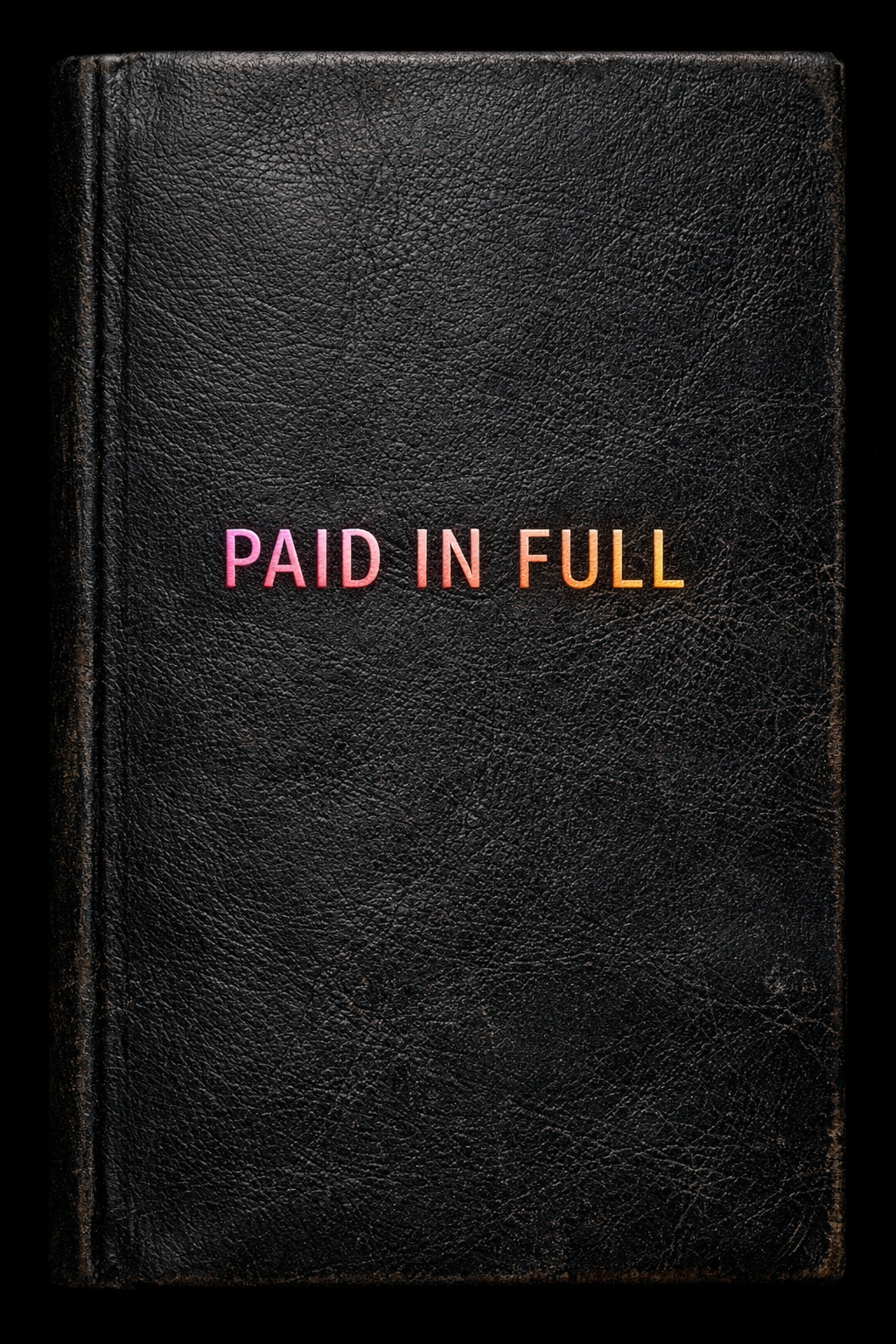
It’s time to be Paid In Full.